Your Trusted Partner For Nutraceutical Softgel Capsules Manufacturing | WHO-GMP Certified | ISO Certified | Call US On : +91 870 990 0329

Soft Gelatin Capsules

Important Links

Get In touch With US

Soft Gelatin Capsules

Table of Contents

Soft gelatin capsules, commonly known as softgel capsules or simply softgels, represent one of the most innovative and versatile dosage forms in the pharmaceutical and nutraceutical industries. These seamless, hermetically sealed capsules have revolutionized drug delivery systems, offering unique advantages that make them the preferred choice for countless medications and supplements worldwide.

What Are Soft Gelatin Capsules?

Soft gelatin capsules are one-piece, hermetically sealed dosage forms consisting of a gelatin-based shell that encapsulates liquid, paste, or semi-solid fill materials. Unlike their hard capsule counterparts, softgels are manufactured as a single unit where the shell and fill are combined simultaneously during production, creating a tamper-evident, airtight seal that protects sensitive ingredients from oxidation, moisture, and contamination.

The soft gelatin capsule shell typically consists of gelatin, plasticizers (such as glycerin or sorbitol), water, and additional components like colorants, opacifiers, and preservatives. This flexible shell can accommodate a wide range of fill formulations, making softgel capsules incredibly versatile for various therapeutic applications.

Soft Gelatin Capsules Uses

The applications of soft gelatin capsules span multiple industries and therapeutic categories. Their unique properties make them particularly suitable for specific pharmaceutical and nutraceutical needs.

Pharmaceutical Applications: Soft gelatin capsules are extensively used for pain management medications, hormone replacement therapies, cardiovascular drugs, and antifungal treatments. The ability to encapsulate oil-based active pharmaceutical ingredients (APIs) makes softgels ideal for drugs with poor water solubility, significantly improving bioavailability and therapeutic efficacy.

Nutraceutical and Dietary Supplements: The dietary supplement industry has embraced softgel technology for delivering vitamins (especially fat-soluble vitamins A, D, E, and K), omega-3 fatty acids, CoQ10, and various herbal extracts. The oxygen-barrier properties of soft gelatin capsules help preserve these sensitive nutrients, extending shelf life and maintaining potency.

Cosmeceutical Products: Beauty and skincare supplements increasingly utilize softgel capsules for delivering collagen, biotin, and other beauty-enhancing ingredients. The elegant appearance and ease of swallowing make these products more appealing to consumers.

Specialized Medical Applications: Soft gelatin capsules are employed in ophthalmic preparations, rectal and vaginal suppositories, and even in certain diagnostic procedures where precise dosing and controlled release are essential.

Soft Gelatin Capsule Uses

Soft Gelatin Capsules Examples

Understanding soft gelatin capsules becomes clearer when examining actual products that utilize this technology. Here are prominent examples across different categories:

Over-the-Counter Medications: Ibuprofen liquid gels provide faster pain relief compared to tablets, while cold and flu remedies like certain formulations of acetaminophen utilize softgel technology for rapid symptom relief. These soft gelatin capsules examples demonstrate the technology’s ability to improve onset of action.

Prescription Medications: Cyclosporine, an immunosuppressant medication, is formulated as softgels to enhance absorption and bioavailability. Similarly, certain antihypertensive medications and hormone therapies utilize soft gelatin capsule formulations to optimize therapeutic outcomes.

Nutritional Supplements: Fish oil capsules represent perhaps the most recognizable softgel products, with billions of units consumed annually worldwide. Vitamin E, evening primrose oil, and multivitamin formulations frequently employ softgel technology to protect light-sensitive and oxygen-sensitive ingredients.

Specialty Formulations: Cannabidiol (CBD) oils, probiotic formulations requiring protection from gastric acid, and combination products containing multiple active ingredients showcase the versatility of soft gelatin capsules in addressing complex formulation challenges.

Softgel Capsules Benefits

The widespread adoption of soft gelatin capsules stems from their numerous advantages over other dosage forms. These softgel capsules benefits extend to manufacturers, healthcare providers, and patients alike.

Enhanced Bioavailability: One of the most significant benefits of softgel capsules is their ability to improve the absorption of poorly water-soluble drugs. By dissolving active ingredients in oil-based carriers or surfactant systems within the capsule, softgels can dramatically increase bioavailability compared to tablets or hard capsules, often reducing the required dose and minimizing side effects.

Superior Product Stability: The hermetic seal created during softgel manufacturing provides an exceptional barrier against oxygen, light, and moisture—three primary factors that degrade pharmaceutical and nutraceutical ingredients. This protection extends shelf life and ensures product potency throughout the distribution chain.

Precise Dosing and Consistency: Softgel manufacturing processes achieve extremely tight weight and fill volume tolerances, ensuring consistent dosing from one capsule to the next. This precision is particularly critical for potent medications where dose uniformity directly impacts safety and efficacy.

Patient Compliance and Convenience: Softgels are generally easier to swallow than tablets due to their smooth, slippery gelatin coating. The liquid or semi-solid fill also means faster disintegration and dissolution, leading to quicker onset of action. Additionally, softgels can mask unpleasant tastes and odors that might otherwise reduce patient compliance.

Elegant Appearance and Brand Differentiation: The ability to produce softgels in various shapes, sizes, and colors allows manufacturers to create distinctive, attractive products that stand out on retail shelves. Printing capabilities enable direct product identification and branding on the capsule surface.

Flexible Formulation Options: Softgel technology accommodates a wide range of fill formulations, including oils, oil-based suspensions, self-emulsifying drug delivery systems (SEDDS), and even some water-miscible liquids. This flexibility enables formulators to optimize drug delivery for specific therapeutic needs.

Tamper-Evidence: The seamless, one-piece construction of soft gelatin capsules provides inherent tamper-evidence. Any attempt to open or compromise the capsule is immediately visible, enhancing product security and consumer confidence.

Hard Gelatin Capsules and Soft Gelatin Capsules

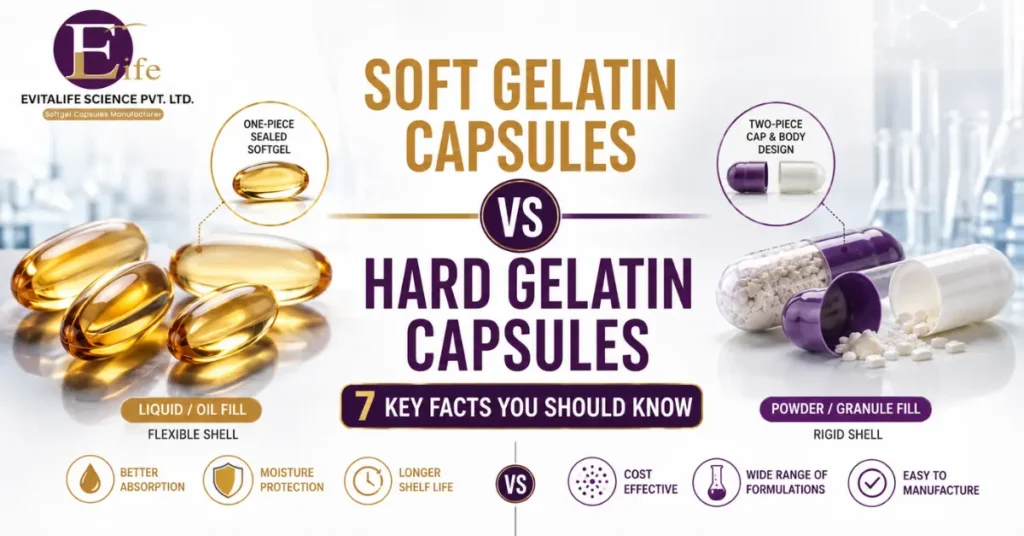
While both hard gelatin capsules and soft gelatin capsules serve as oral dosage forms, they differ significantly in composition, manufacturing, and applications. Understanding these distinctions helps formulators select the appropriate technology for specific products.

Structural Differences: Hard gelatin capsules consist of two separate pieces (a cap and body) that are filled and then joined together. In contrast, soft gelatin capsules are formed as a single, sealed unit during manufacturing. This fundamental difference impacts everything from fill options to manufacturing processes.

Fill Material Compatibility: Hard capsules typically contain powders, pellets, granules, or occasionally semi-solids, while softgels are specifically designed for liquid and semi-solid fills. This makes softgels the only practical option for oil-based formulations and liquid active ingredients.

Moisture Content: Soft gelatin capsules contain higher moisture content (approximately 6-13%) compared to hard capsules (13-16% for standard hard capsules, less for low-moisture variants). This difference affects storage requirements and formulation stability considerations.

Manufacturing Process: Hard capsules are filled on separate equipment after the shells are manufactured, allowing for flexibility in production. Softgel manufacturing requires specialized rotary die processes or plate processes where filling and sealing occur simultaneously, demanding more complex equipment but offering superior sealing and contamination protection.

Bioavailability Considerations: When comparing hard gelatin capsules and soft gelatin capsules, softgels generally provide superior bioavailability for lipophilic drugs due to the drug already being dissolved or dispersed in the fill medium. Hard capsules require dissolution of both the shell and the powder contents before absorption can begin.

Cost Factors: Softgel manufacturing typically involves higher production costs due to specialized equipment and more complex processes. However, the benefits in bioavailability, stability, and patient preference often justify the additional investment.

The Softgel Manufacturing Process

Understanding how soft gelatin capsules are manufactured provides insight into their unique properties and advantages. The rotary die process, the most common manufacturing method, involves several precisely controlled steps.

Gelatin Mass Preparation: The process begins with preparing the gelatin shell mass by combining pharmaceutical-grade gelatin with plasticizers, purified water, and other excipients. This mixture is carefully heated and mixed until a homogeneous, air-free mass forms. The viscosity and temperature are critical parameters that affect the final capsule quality.

Ribbon Formation: The gelatin mass is spread into continuous ribbons of precise thickness using spreading equipment. These ribbons are carefully conditioned to achieve the optimal moisture content and temperature for encapsulation.

Encapsulation: In the rotary die machine, two gelatin ribbons are fed between two rotating dies that contain capsule-shaped cavities. As the ribbons pass through the dies, the fill material is precisely injected between them. The dies press the ribbons together, cutting and sealing the capsules in one continuous motion. This creates the hermetic seal that characterizes soft gelatin capsules.

Drying and Inspection: Newly formed softgels contain excess moisture and require controlled drying in specialized tumble dryers or drying tunnels. The drying process must be carefully managed to achieve the target moisture content without compromising capsule integrity. After drying, capsules undergo rigorous inspection for appearance defects, leakage, and dimensional accuracy.

Finishing Operations: Depending on product requirements, softgels may undergo additional processing such as polishing (to create a high-gloss finish), printing (for product identification and branding), or sorting (to remove any defective units).

Quality Considerations and Regulatory Standards

Soft gelatin capsules must meet stringent quality standards established by pharmacopoeias worldwide, including the United States Pharmacopeia (USP), European Pharmacopoeia (Ph. Eur.), and others. Key quality parameters include:

Physical Specifications: Capsule appearance, shape, dimensions, and uniformity must meet predetermined specifications. Any visible defects such as dimples, wrinkles, bubbles, or discoloration are grounds for rejection.

Dissolution and Disintegration: Regulatory authorities require that soft gelatin capsules release their contents within specified timeframes, ensuring predictable drug absorption and therapeutic effect.

Microbial Quality: Softgels must meet strict microbiological limits for total viable aerobic count, yeast and mold, and absence of specific pathogens. The gelatin shell itself provides some antimicrobial properties, but proper manufacturing controls are essential.

Leakage Testing: Given their liquid or semi-solid contents, softgels undergo rigorous leakage testing to ensure the hermetic seal remains intact throughout the product’s shelf life.

Stability Studies: Accelerated and long-term stability studies assess how soft gelatin capsules perform under various storage conditions, monitoring parameters like drug content, dissolution, appearance, and microbial quality over time.

Future Trends in Softgel Technology

The softgel industry continues to evolve with innovations addressing emerging healthcare needs and market demands. Vegetarian and vegan alternatives to traditional gelatin shells, using materials like modified starch, carrageenan, or pullulan, are gaining traction as plant-based lifestyles become more prevalent.

Modified-release softgels represent another growth area, with technologies enabling delayed, sustained, or targeted release profiles. These advanced formulations can improve dosing convenience and therapeutic outcomes for chronic conditions requiring steady drug levels.

Personalized medicine and precision dosing are pushing softgel manufacturers toward more flexible production systems capable of producing smaller batches with variable strengths, accommodating individualized treatment approaches.

The integration of digital technologies, including advanced process analytical technology (PAT) and quality-by-design (QbD) principles, is enhancing softgel manufacturing efficiency and consistency while reducing waste and production costs.

Conclusion

Soft gelatin capsules have proven their value across decades of pharmaceutical and nutraceutical development. Their unique combination of superior bioavailability, excellent stability, patient-friendly characteristics, and manufacturing precision continues to make softgel technology the optimal choice for countless applications.

Whether formulating a new drug entity, reformulating an existing product for improved performance, or developing a premium dietary supplement, soft gelatin capsules offer unmatched versatility and benefits. As manufacturing technologies advance and new shell materials emerge, softgels will undoubtedly maintain their position at the forefront of oral drug delivery systems.

For manufacturers seeking to differentiate their products, improve therapeutic outcomes, or address challenging formulation requirements, soft gelatin capsules represent not just a dosage form option, but a comprehensive solution that addresses multiple stakeholders’ needs—from formulators to prescribers to patients. The continued investment in softgel technology by leading pharmaceutical and nutraceutical companies worldwide confirms that these remarkable dosage forms will remain central to healthcare delivery for generations to come.

Find Your Softgel Capsule

Search for our softgel capsules by their composition name to quickly find the product you need.

Generic selectors
Exact matches only
Search in title
Search in content
Post Type Selectors
softgel-capsule
Get The Best offer on Premium Softgel Capsules
GMP-certified
ISO-approved
Premium Quality
-Get In Touch With US